A cross-sell email is a powerful marketing strategy designed to suggest complementary products or services to customers based on their current browsing history, items in their shopping cart, or previous purchases.
This tactic aims to enhance the shopping experience by offering additional value through relevant product recommendations, thereby increasing the average order value and fostering customer loyalty. Unlike cross-sell popups that appear on websites during the shopping process, cross-sell emails reach customers directly, often after they have left the site, providing a personalized touch to the shopping journey.
How Do Cross-Sell Emails Work?
Cross-sell emails function by strategically leveraging customer data to suggest complementary products or services that enhance their initial purchase or interest. This technique is rooted in analyzing a customer’s browsing history, previous purchases, or items currently in their shopping cart to offer personalized recommendations.
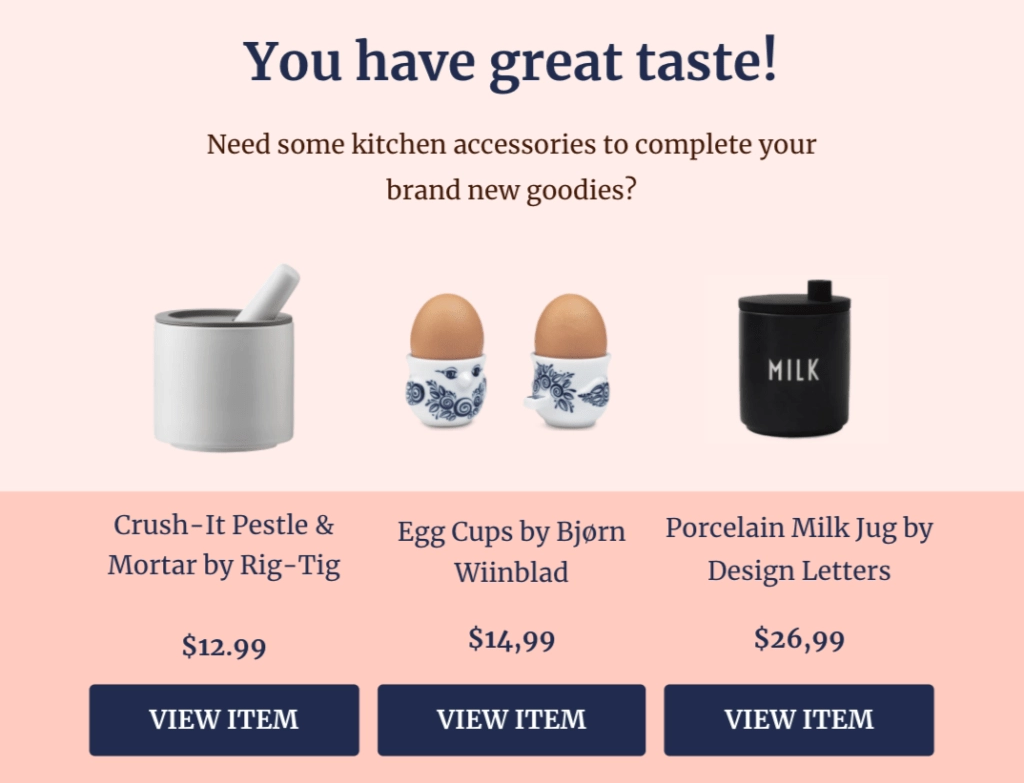
For instance, if a customer has purchased a winter coat, a cross-sell email might suggest a winter hat and gloves, aiming to not only increase the average order value but also to enrich the customer’s shopping experience. The magic of cross-sell emails lies in their timing and personalization. They can be sent at various key moments, such as after a purchase, alongside cart abandonment notifications, or within product newsletters, ensuring that the recommendations are relevant and timely.
This method transforms a singular purchase into an opportunity for customers to discover additional items they need or desire, effectively turning a one-time interaction into an ongoing relationship and driving sales growth for businesses.
4 Benefits of Cross-Sell Emails:
Cross-sell emails are an invaluable asset in the arsenal of email marketing strategies, yielding remarkable benefits for businesses aiming to deepen customer relationships and drive sales growth:
- Increased Sales and Revenue: By presenting complementary products, cross-sell emails encourage customers to make additional purchases, thereby expanding their shopping baskets and significantly boosting overall sales.
- Enhanced Customer Retention: These emails serve as a tool for customer engagement, offering products that resonate with the customers’ previous purchases, thus promoting repeat business and fostering brand loyalty.
- Amplified Customer Satisfaction: Tailoring suggestions based on the customer’s preferences and purchase history, cross-sell emails personalize the shopping experience, enhancing satisfaction and reinforcing the customer’s connection to the brand.
- Competitive Advantage: Through targeted personalization and understanding customer needs, cross-sell emails help businesses stand out, offering a strategic edge in the competitive digital marketplace.
Leveraging customer data for personalization, these emails not only drive revenue but also contribute to a satisfying and loyalty-enhancing shopping experience, underscoring the multifaceted value of cross-sell strategies.
What Should Be Included in Every Cross-Sell Email?
1 Main Product Highlight
The cornerstone of any cross-sell email is the main product highlight. This section reminds the customer of what they showed interest in or added to their cart. It’s crucial for reconnecting the customer with their initial desire, potentially reducing cart abandonment by guiding them back to complete the purchase.
2 Add-on Item Recommendations
Following the main product highlight, the email should present two or more recommended add-on items. These recommendations are not random; they must complement the main product, enhancing the overall value of the purchase for the customer. Personalization plays a key role here, as tailored suggestions are more likely to resonate with the customer and lead to additional sales.
3 Series Integration
The effectiveness of a cross-sell email multiplies when it’s part of a series rather than a one-off communication. This strategy allows for sustained engagement with the customer, providing multiple touchpoints to showcase various complementary products. A well-structured email series keeps the dialogue open, fostering an ongoing relationship that encourages further purchases.
Incorporating these elements into cross-sell emails creates a compelling narrative that not only highlights individual products but also builds a cohesive shopping experience, ultimately leading to increased sales and customer loyalty.
Conclusion
Cross-sell emails are a sophisticated blend of timing, personalization, and strategic product recommendation, designed to enhance the customer’s shopping journey while driving sales growth for businesses. By analyzing customer behavior and leveraging data on past purchases or current interests, these emails offer highly relevant add-on suggestions that complement the main purchase. The effectiveness of cross-sell emails hinges on their ability to be timely, tailored, and integrated into a broader email marketing strategy, thereby fostering repeat purchases and enhancing customer loyalty.