
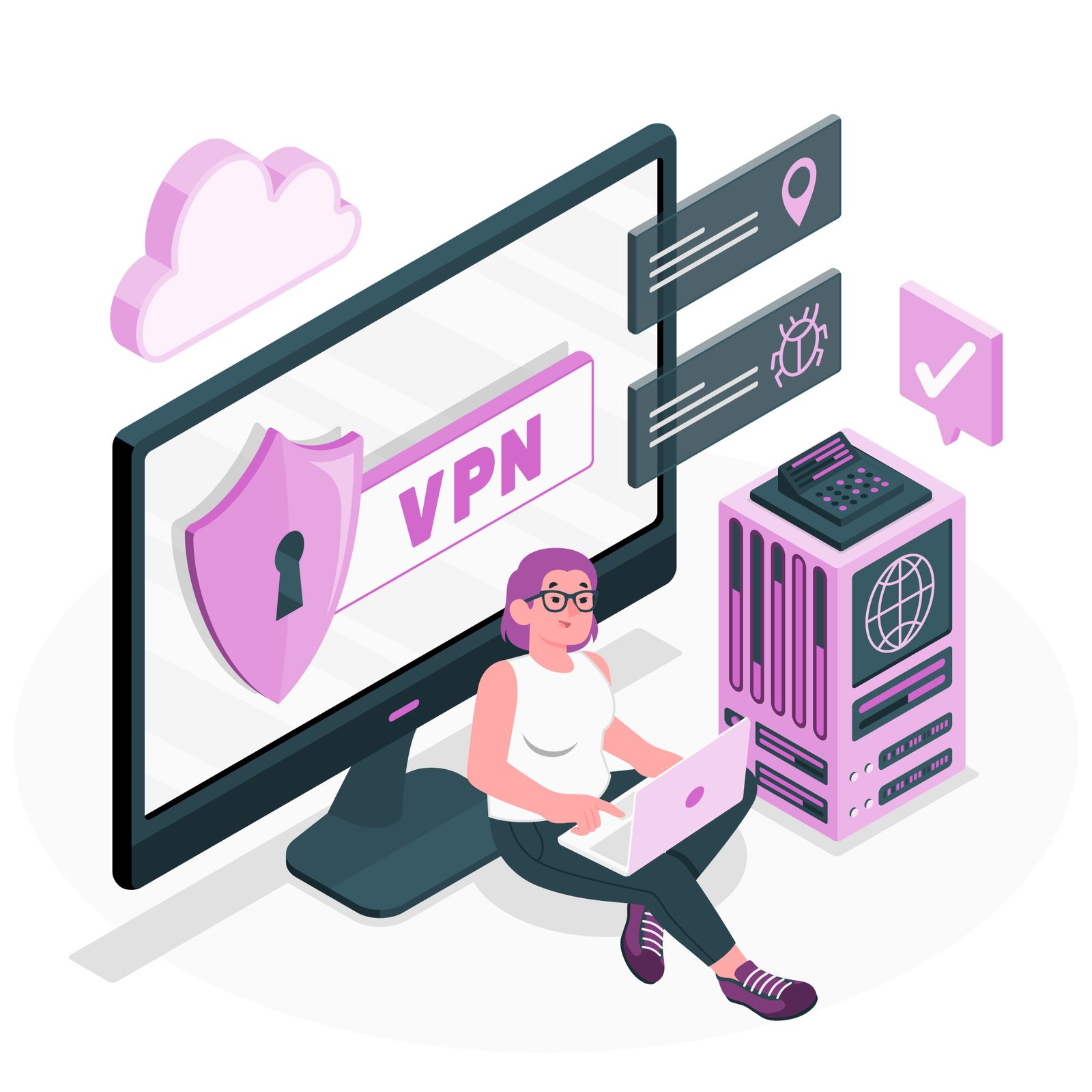
A Secure Remote Access VPN is essential for enabling remote users to access corporate networks safely and efficiently.
This technology creates an encrypted tunnel between a remote user’s device and the corporate network, ensuring that all transmitted data remains confidential and protected from eavesdropping. Unlike traditional remote access methods, a Secure Remote Access VPN provides a cost-effective solution that simplifies network management while ensuring secure connectivity.
How a Secure Remote Access VPN Works?
A Secure Remote Access VPN establishes a secure, encrypted connection between a remote user’s device and the corporate network. This process begins with a VPN client that handles the initial authentication, ensuring only authorized users can connect. Once authenticated, the VPN client software creates an encrypted tunnel to the VPN gateway, which acts as the VPN server. This tunnel ensures that all data transmitted between the user’s device and the corporate network remains confidential and protected from eavesdropping, even over public internet connections.
Key Benefits:
1 Secure Remote Connectivity
One of the primary advantages of a Secure Remote Access VPN is its ability to encrypt data traffic, ensuring confidentiality and protecting the integrity of sensitive information. This secure connectivity allows remote users to access corporate resources, such as applications and databases, as if they were on-site.
2 Cost-Effectiveness
Implementing a Secure Remote Access VPN can be a cost-effective solution for expanding network access beyond the physical confines of the office. For many organizations, this can delay the need for extensive infrastructure investments, providing a scalable solution that grows with the company.
3 Simplified Management
Secure Remote Access VPNs offer a simplified management process, providing a single point of control for user access and security policies. Network administrators can easily manage connections, monitor security, and enforce policies without the need for complex on-site configurations.
Challenges and Risks
1. Limited Security Measures
Traditional remote access VPNs often come with limited security controls beyond basic encryption and authentication. This can leave sensitive corporate resources exposed to unauthorized access, especially if more advanced security measures are not implemented.
2. Inconsistent User Experience
The user experience with remote access VPNs can vary, sometimes being cumbersome due to connectivity issues and the need for manual logins. These factors can hinder productivity and frustrate remote employees.
3. Complex Management and Scalability
As organizations grow, managing a Secure Remote Access VPN can become increasingly complex and time-consuming. Scaling to accommodate more remote users often requires additional hardware and can lead to significant administrative overhead.
4. Exposure to Network Vulnerabilities
Remote access VPNs can expose networks to vulnerabilities, particularly if the security posture of endpoint devices is not assessed. Compromised devices can introduce malware or other cyber threats into the corporate network.
Modern Alternatives
Secure Access Service Edge (SASE)
With the rise of remote work and the shift towards cloud-based services, Secure Access Service Edge (SASE) has emerged as a modern alternative to traditional VPNs. SASE combines wide area network (WAN) capabilities with robust security measures in a cloud-native service, integrating networking and security protocols into a unified system. This approach offers continuous, secure access for remote workers, enhancing security and simplifying management.
Zero Trust Network Access (ZTNA)
Zero Trust Network Access (ZTNA) represents another modern alternative, focusing on granular access control and continuous verification of user identity and device security. ZTNA ensures that access is granted only to specific applications and for specific sessions, providing a higher level of security compared to traditional VPNs.
Conclusion
Secure Remote Access VPNs play a vital role in enabling secure remote connectivity for modern organizations. While they offer significant benefits such as secure data transmission, cost-effectiveness, and simplified management, they also come with challenges related to security, user experience, and scalability. By considering modern alternatives like SASE and ZTNA, organizations can enhance their security posture and provide seamless, secure access to remote users. Understanding and addressing these challenges is essential for leveraging Secure Remote Access VPNs to support a productive and secure remote workforce.